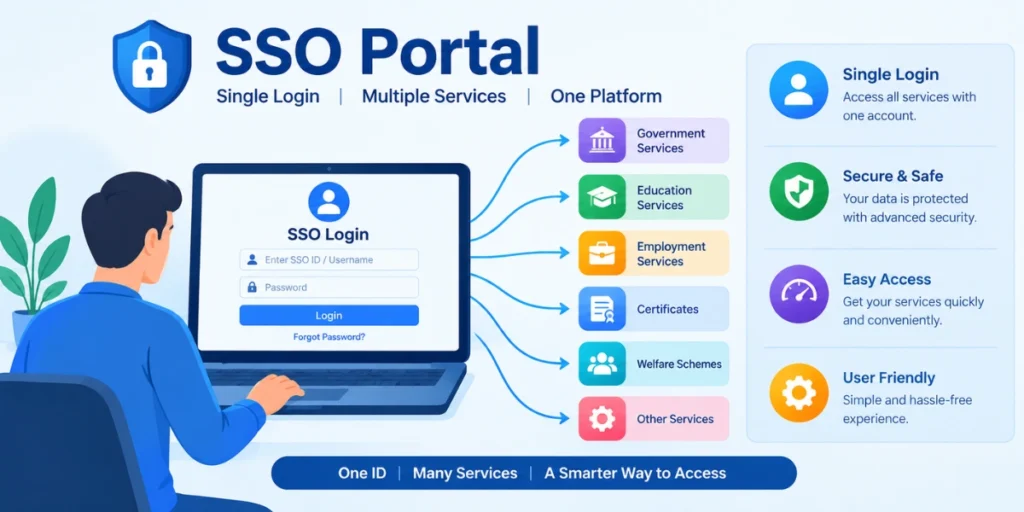
The SSO Portal is an online platform designed to provide users with access to multiple digital services through a single login. SSO stands for Single Sign-On, which means users do not need to create or remember separate login credentials for every online service connected to the portal.
In India, SSO portals are increasingly being used by government departments and organizations to simplify access to online services. One well-known example is the Rajasthan SSO Portal, which allows registered users to access several government and digital services using one SSO ID and password.
The main purpose of an SSO Portal is to make online services easier, faster, and more convenient. Instead of visiting different websites and maintaining multiple accounts, users can log in through one centralized platform.
What Is an SSO Portal?
An SSO Portal is a centralized authentication system that allows users to access several connected applications with one set of login credentials. Once a user successfully signs in, the system can authenticate the user for other authorized services without requiring another login.
The concept is particularly useful when an organization provides many online services. Users can access services from a single dashboard, while the organization can manage authentication and user accounts more efficiently.
For example, a government SSO system may connect services related to employment, education, applications, certificates, welfare schemes, and other online facilities. The exact services available depend on the particular SSO platform.
Key Features of SSO Portal
An SSO Portal generally includes several features designed to make digital services easier to use.
Single Login
The most important feature is single-login access. Users can use one registered ID and password instead of maintaining separate credentials for different connected services.
Centralized Dashboard
After logging in, users can generally view available applications and services from a centralized dashboard. This makes it easier to find the required service.
Online Service Access
Depending on the portal, users may be able to access multiple government or organizational services online without repeatedly visiting different platforms.
Account Management
Users can typically manage basic account information, login credentials, and other profile-related details through the portal.
Secure Authentication
SSO systems are designed to authenticate users before allowing access to connected services. Security measures may include passwords, OTP verification, and other authentication mechanisms depending on the platform.
How to Register on an SSO Portal
The registration process varies depending on the SSO platform. However, the general process usually follows a few basic steps.
First, visit the official SSO Portal and select the registration or sign-up option. You may be asked to choose an appropriate registration category, such as citizen, employee, business user, or another applicable category.
Next, provide the required information. Depending on the portal, this can include a mobile number, email address, identification details, or other information required for account verification.
After entering the required details, complete the verification process. Some portals use an OTP sent to the registered mobile number or email address.
Once verification is successful, create or receive your SSO credentials. Keep your login information secure and avoid sharing your password or OTP with anyone.
How to Log In to the SSO Portal
Logging into an SSO Portal is generally straightforward. Open the official portal and select the Login option.
Enter your registered SSO ID, username, or other required login information. Then enter your password and complete any additional verification requested by the system.
After successful authentication, you will be redirected to your dashboard. From there, you can select the relevant application or online service.
If you forget your password, use the portal’s official Forgot Password or account recovery option. Follow the verification instructions provided by the platform to regain access.
Benefits of Using an SSO Portal
The SSO system provides several advantages for both users and organizations.
Convenient access: Users can access multiple connected services through a single account.
Reduced passwords: Maintaining one primary account can reduce the need to remember numerous usernames and passwords.
Faster service access: A centralized dashboard can make it easier to locate and use digital services.
Better account management: Organizations can manage authentication and user access from a centralized system.
Digital convenience: Users can complete many activities online without repeatedly creating accounts on different platforms.
These benefits can make digital service delivery more organized and user-friendly.
SSO Portal for Government Services
Government SSO platforms can play an important role in digital governance. Instead of requiring citizens to maintain separate accounts for different departments, an integrated SSO system can provide access through a common identity.
For example, an SSO platform may provide links to services related to government applications, employment, education, business services, certificates, and other facilities.
The availability of specific services depends on the state, department, or organization operating the portal. Users should always check the official portal for the latest list of available services.
Documents and Information Required
The information required for SSO registration depends on the specific portal and registration category. Commonly requested information may include:
- Mobile number
- Email address
- Basic personal information
- Identity or registration details
- Employee or organization information, where applicable
- OTP verification
Users should enter accurate information during registration. Incorrect details can create problems during verification or account recovery.
Important Security Tips for SSO Users
Because one SSO account may provide access to multiple services, protecting the account is important.
Always use a strong and unique password. Never share your password, OTP, or other authentication information with another person.
Access the SSO Portal through its official website rather than links received from unknown sources. Avoid entering login information on suspicious websites.
It is also advisable to log out after using an SSO account on a shared or public computer. Keep your registered mobile number and email information updated where the portal allows it, as these may be used for account recovery and verification.
Common Problems While Using SSO Portal
Users may occasionally face problems while accessing an SSO Portal. Common issues include incorrect passwords, forgotten login credentials, OTP delays, browser problems, or temporary server issues.
If you cannot log in, first verify that your credentials have been entered correctly. If you have forgotten your password, use the official password recovery facility.
For OTP-related problems, check your mobile network and wait briefly before requesting another OTP. If the problem continues, consult the portal’s official help or support section.
Conclusion
The SSO Portal provides a centralized way to access multiple online services using a single account. Its single-login approach can simplify digital service access, reduce the need for multiple credentials, and provide users with a convenient dashboard.
Government and organizational SSO platforms can make online services more accessible by bringing different applications together under one authentication system. Users should register through the official portal, keep their credentials secure, and use the available account-recovery and support options whenever necessary.